How Many Solar Panels Power a Fridge in Nigeria?
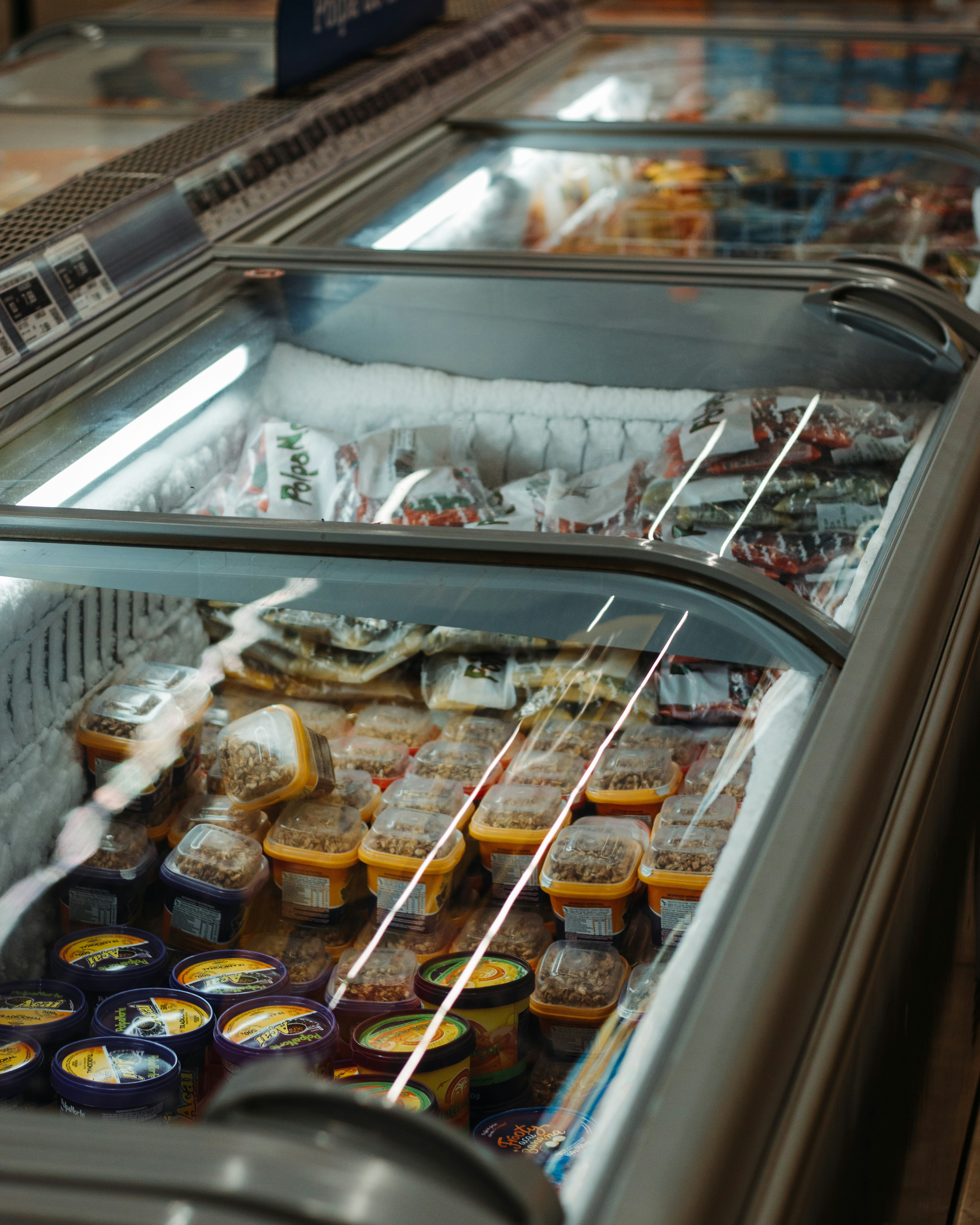
If your only objective is powering a fridge, your system requirements will be very different from someone who wants to run a refrigerator, freezer, television, fans, lights, Wi-Fi router and washing machine.
How Many Solar Panels Power a Fridge in Nigeria?
If you are thinking about moving your refrigerator from NEPA to solar, one of the first questions you will probably ask is: how many solar panels do I need to power a fridge in Nigeria?
The short answer is: usually one or two modern solar panels can provide enough daytime energy for a typical refrigerator, but powering the fridge reliably day and night requires more than just panels.
You also need to consider the inverter, battery, sunlight available at your location, the size and efficiency of the refrigerator, and whether you want the solar system to power anything else.
This is where many people get solar calculations wrong. They look at the wattage written on the fridge, divide it by the wattage of a solar panel, and assume they have their answer.
Solar doesn't work that way.
Let's break it down.
How Much Electricity Does a Fridge Use?
A typical household refrigerator in Nigeria may use somewhere around 80W to 250W while its compressor is running, depending on the model and size.
But your fridge does not normally consume that amount continuously.
The compressor switches on and off throughout the day. This means a refrigerator rated at 150W doesn't necessarily consume:
150W × 24 hours = 3.6kWh every day.
Its actual daily consumption can be considerably lower.
A modern, energy-efficient refrigerator may consume roughly 0.8kWh to 1.5kWh per day, although actual usage varies significantly.
Older refrigerators, large double-door models, poorly maintained fridges, or refrigerators operating in very hot conditions can consume more.
This is particularly important in Nigeria because our climate can be hot, and the hotter the environment, the harder the refrigerator may have to work to maintain its internal temperature.
So, How Many Solar Panels Do You Need?
Let's use a common example.
Suppose your refrigerator consumes approximately 1.2kWh per day.
A modern 550W solar panel can theoretically produce 0.55kW at peak output.
But you shouldn't calculate solar production using the panel's maximum rating alone. Real-world production depends on sunlight intensity, panel orientation, temperature, shading, dust, wiring losses, inverter efficiency and other factors.
If you receive several good hours of usable sunlight during the day, one 550W panel can potentially generate enough energy during the day to cover a refrigerator's daily energy requirement.
However, that doesn't mean one panel automatically guarantees 24-hour refrigerator operation.
The energy generated during the day needs to be used immediately or stored in a battery for later.
That distinction is very important.
One 550W Panel vs Two 550W Panels
For a small, efficient refrigerator, one 550W panel may be enough as part of a properly designed solar system.
But if you want more energy margin, faster battery charging, or you plan to power other appliances alongside the fridge, two 550W panels provide considerably more generation capacity.
For example:
1 × 550W panel = 550W of installed solar capacity
2 × 550W panels = 1.1kW of installed solar capacity
The second option gives you more generation capacity during good sunlight hours and can make it easier to recharge the battery after overnight use.
This is why a professional installer should not simply ask, "How many watts is your fridge?"
They should ask what else you want the system to power.
The Battery Is Just as Important as the Panels
Here's something many first-time solar buyers don't realise.
Solar panels generate electricity. Batteries store electricity.
During the day, your panels generate power. Your refrigerator can use that power directly, while excess energy can charge your battery.
At night, the panels stop producing electricity.
Your refrigerator doesn't stop working.
So if you want your fridge running through the night, you need battery storage.
This is especially important in Nigeria where grid electricity can disappear for hours and you still need the refrigerator running to protect food, drinks, medicines and other temperature-sensitive items.
A properly sized battery allows the refrigerator to continue operating after sunset and during periods when there is insufficient sunlight.
What About the Inverter?
You also need an inverter.
A refrigerator isn't just a simple resistive load like an electric bulb. The compressor has a starting surge when it switches on.
That means an inverter must be capable of handling both the refrigerator's normal running power and its startup demand.
A pure sine wave inverter is generally the appropriate type for appliances such as refrigerators and other sensitive electronics.
For example, DB Energy supplies and installs hybrid solar inverter systems, including pure sine wave inverter solutions. Its current product range includes a 5kW hybrid pure sine wave inverter with an integrated MPPT charge controller.
But you shouldn't automatically buy a 5kW inverter simply because it is available.
Your inverter should be selected according to the complete load you want to run.
If your only objective is powering a fridge, your system requirements will be very different from someone who wants to run a refrigerator, freezer, television, fans, lights, Wi-Fi router and washing machine.
Example: Solar System for a Refrigerator
Let's imagine you have:
- One medium-sized refrigerator
- Approximately 1.2kWh daily consumption
- A modern 550W solar panel
- Lithium battery storage
- A suitable hybrid inverter
The panel can generate energy during the day.
The refrigerator uses some of that energy directly.
The remaining energy can charge the battery.
At night, the battery supplies the refrigerator.
The inverter converts the stored DC electricity from the battery into the AC electricity your refrigerator needs.
That's the basic system.
But if you also want to run a freezer, TV, lights, fans and other appliances, the system has to be redesigned around the combined load.
What If You Have a Large Double-Door Fridge?
This is where the calculation changes.
A large double-door refrigerator with an ice maker, water dispenser and additional cooling features may consume considerably more energy than a small single-door refrigerator.
Older refrigerators can also be surprisingly power-hungry.
So instead of saying:
"Every fridge needs one solar panel."
A better way to think about it is:
Your solar system should be sized according to the fridge's actual energy consumption.
If your refrigerator uses more energy, you may need additional panels and a larger battery.
How Do You Know How Much Your Fridge Uses?
Check the refrigerator's specification label or manual.
Look for information such as:
- Rated power
- Voltage
- Current
- Energy consumption
- kWh/year
- Model number
If the manufacturer provides an annual energy consumption figure, you can divide it by 365 to get a rough daily energy requirement.
For example, if a refrigerator is rated at 400kWh per year:
400 ÷ 365 ≈ 1.1kWh per day
That gives you a much better starting point than simply looking at the compressor's wattage.
You can also use an energy meter to measure the refrigerator's actual consumption over several days.
That is even better because real-world usage can differ from the manufacturer's laboratory figures.
Don't Forget Nigeria's Weather
Solar production isn't exactly the same every day.
A bright, clear day can give you strong solar production.
Cloudy weather reduces production.
Rainy periods can also reduce the amount of energy your panels generate.
Heat, dust, shading and poor installation can further affect performance.
This is why simply calculating:
550W × 5 hours = 2.75kWh
doesn't mean your panel will produce exactly 2.75kWh every day.
A good solar installation should account for these real-world conditions and include enough capacity to meet your requirements with an appropriate safety margin.
Why Professional Solar Sizing Matters
This is one reason you should be careful about buying a random number of panels because someone on WhatsApp told you that "two panels can carry your fridge."
They may be right.
They may also be completely wrong.
A professional solar installer should look at your appliance load, usage pattern, available roof space, sunlight exposure, battery requirements and future needs before recommending a system.
DB Energy follows this kind of approach. Its installation process starts with a site survey to assess energy needs, roof space and sunlight exposure, followed by system design, professional installation, testing and handover.
DB Energy also provides solar installation, inverter solutions, panel solutions, battery storage, maintenance and solar consultation for homes and businesses across Nigeria.
The company currently lists service coverage in cities including Lagos, Enugu, Asaba, Abuja, Port Harcourt, Benin City, Onitsha, Owerri and Warri.
That matters because a solar system isn't just about buying panels. Installation quality, battery sizing, inverter selection, protection and after-sales support all affect how well the system performs.
So, How Many Solar Panels Power a Fridge?
For a typical modern refrigerator, one 550W solar panel may be capable of generating enough daytime energy for the fridge under good conditions.
But if you want reliable operation throughout the day and night, you should think beyond the panel count.
You need:
Solar panels + inverter + battery + proper system sizing.
And if you want to add a freezer, TV, fans, lights, pumping machine, Wi-Fi, air conditioner or other appliances, the required system size increases.
There is no universal number of panels that works for every Nigerian home.
The right question isn't simply:
"How many panels can power my fridge?"
It is:
"How much energy does my fridge consume, and what solar system can reliably supply that energy day and night?"
That is the calculation that gives you a system you can actually depend on.
Ready to Power Your Fridge With Solar?
If you're tired of worrying about whether your food will survive the next power outage, solar can give you a more reliable way to keep your refrigerator running.
The important thing is to get the system properly designed from the beginning rather than buying panels, an inverter and battery separately and hoping they work together.
Get Your Free Solar Quote from DB Energy →
DB Energy can assess your energy needs and design a solar system around your home or business, with professional installation, quality equipment and ongoing support.
Related Posts
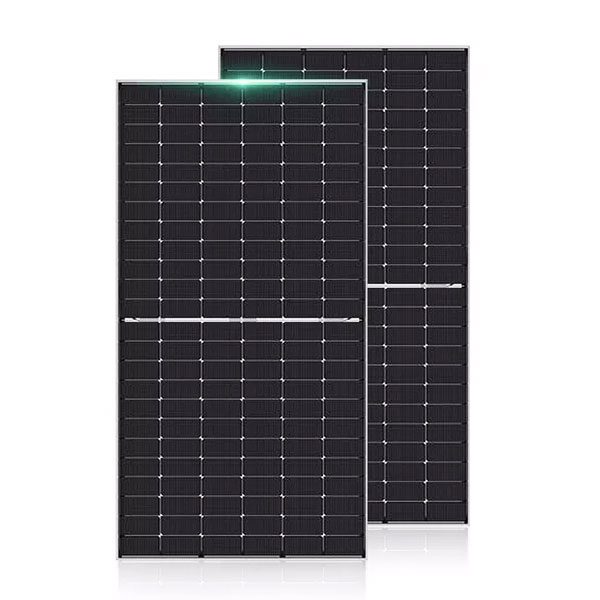
How Much Do Solar Panels Cost in Nigeria in 2026? A Complete Breakdown
A small 100W panel can cost tens of thousands of naira, while modern 550W, 600W and 650W panels can cost well over ₦100,000 each. Current 2026 market listings show that prices can also vary considerably between sellers, so it is better to work with a realistic price range than one fixed figure.
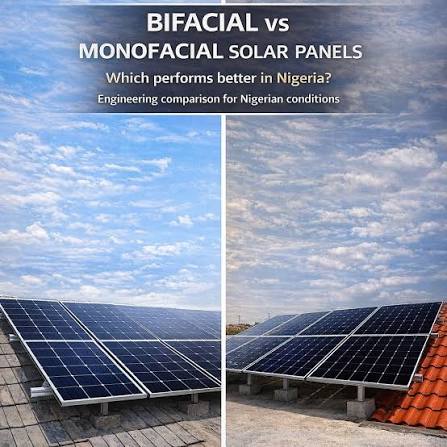
Bifacial Solar Panels vs. Traditional Panels: Which Performs Better In Nigeria?
Bifacial panels can produce more energy, but they do not magically double the electricity you get from a panel. The amount of extra power you get depends heavily on what is underneath the panel, how high it is installed, how much sunlight reaches the back and how reflective the surrounding surface is.
Ready to Go Solar?
Get a free, no-obligation solar quote today. Our team will design a solar system tailored to your home or business.